
Wisdom Tooth Removal in Bhayandar
Wisdom teeth are the last permanent teeth to develop and usually appear during the late teenage years or early adulthood. When there is not enough space for a wisdom tooth to erupt normally, it may become partially or completely trapped in the gum or jawbone. This can cause pain, swelling, food accumulation, infection, or problems with nearby teeth. Best Wisdom Tooth Removal in Bhayandar, Mumbai
At Dental Studio in Bhayandar West, Mumbai, Dr. Hirak Shah provides dental evaluation and wisdom tooth extraction based on the position and condition of the tooth. Early assessment can help identify wisdom tooth problems before they become more difficult to manage.
What Is a Wisdom Tooth?
Wisdom teeth are the third molars located at the back of the mouth. Most people develop up to four wisdom teeth, although the number and development can vary.
Some wisdom teeth erupt normally and do not cause problems. Others may remain partially or completely trapped because of limited space in the jaw. Such teeth are commonly described as impacted wisdom teeth. A dental examination and, when required, an X-ray can help determine the position of a wisdom tooth and whether treatment is necessary.
What Is an Impacted Wisdom Tooth?
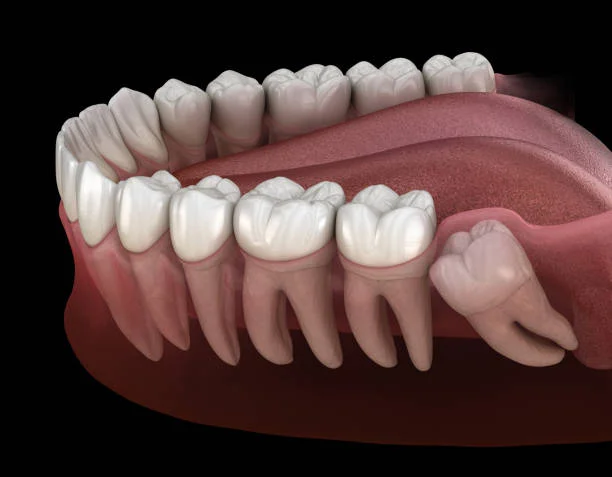
An impacted wisdom tooth is a tooth that does not fully erupt into its normal position. It may remain beneath the gum or jawbone, or it may erupt at an unusual angle. An impacted tooth can sometimes remain symptom-free. In other cases, it may cause repeated inflammation, infection, difficulty cleaning the area, or pressure on the neighbouring tooth. Learn about our doctor.
Common Types of Wisdom Tooth Impaction
Vertical impaction: The tooth remains relatively upright but does not erupt fully.
Horizontal impaction: The tooth lies sideways and may press against the adjacent molar.
Mesioangular impaction: The tooth is tilted forward towards the neighbouring tooth.
Distoangular impaction: The tooth is tilted backward towards the rear of the jaw.
The position of the tooth, its relationship with nearby structures, and the patient's symptoms are considered when deciding whether extraction is appropriate.
Symptoms of Wisdom Tooth Problems
Not every wisdom tooth causes symptoms. When problems develop, some common signs include:
Pain at the back of the mouth
Swelling around the wisdom tooth
Red or tender gums
Difficulty opening the mouth
Pain while chewing
Food getting trapped around the tooth
Bad taste or unpleasant mouth odour
Repeated gum infections
Tooth decay around the wisdom tooth or neighbouring tooth
Why Do Wisdom Teeth Cause Problems?
One common reason is lack of adequate space in the jaw. When a wisdom tooth cannot erupt properly, part of the tooth may remain covered by gum tissue. Food and bacteria can accumulate around the partially erupted tooth, making the area difficult to clean. This may contribute to inflammation, infection, tooth decay, or gum problems.
The condition of each wisdom tooth is different, so extraction is not automatically required simply because a wisdom tooth is present.
When Is Wisdom Tooth Extraction Recommended?
Wisdom tooth extraction may be considered when the tooth is causing or is associated with problems such as repeated infection, significant decay, gum disease around the tooth, damage to an adjacent tooth, or other clinically relevant complications.
A dentist may also recommend monitoring when a wisdom tooth is not currently causing a problem. The decision is based on a clinical examination, symptoms, tooth position, X-ray findings, and overall oral health.
Recovery After Wisdom Tooth Extraction
Recovery varies from person to person. Some patients return to routine activities relatively quickly, while surgical extraction may require additional recovery time.
During the initial recovery period, patients may be advised to:
Follow the dentist's instructions carefully
Choose softer foods if chewing is uncomfortable
Avoid smoking or tobacco products
Avoid disturbing the extraction site
Maintain oral hygiene as advised
Take prescribed or recommended medication as directed
Attend follow-up appointments when required
Swelling and discomfort generally improve gradually during the healing period.
What Should You Avoid After Wisdom Tooth Extraction?
After extraction, it is important to avoid activities that may interfere with healing. Your dentist may advise you to avoid smoking or tobacco, vigorous rinsing, disturbing the extraction site, and strenuous physical activity for the recommended period.
Following the aftercare instructions can help reduce the risk of complications.
Why Choose Dr. Hirak Shah for Wisdom Tooth Extraction in Bhayander?
Dr. Hirak Shah provides wisdom tooth extraction at Dental Studio in Bhayandar West, Mumbai. With more than 15 years of clinical experience, he evaluates the condition and position of the wisdom tooth and recommends suitable treatment based on each patient's dental needs. For wisdom tooth consultation, call 097692 57881.
Conclusion
If you are looking for Best Wisdom Tooth Extraction in Bhayander, Dr. Hirak Shah provides Best Wisdom Tooth Removal in Bhayandar, Mumbai at Dental Studio in Bhayandar West, Mumbai. Treatment is planned after assessing the tooth position, symptoms, surrounding teeth, and individual oral health needs. For consultation enquiries, contact Dr. Hirak Shah at 097692 57881.
Frequently Asked Questions
Q.1. What is an impacted wisdom tooth?
Ans - An impacted wisdom tooth is a tooth that cannot fully erupt into its normal position because of limited space or its position in the jaw. It may remain partly or completely covered by gum or bone.
Q.2. Does every wisdom tooth need to be removed?
Ans - No. A wisdom tooth that has erupted normally, can be cleaned properly, and is not causing dental problems may not require extraction. The dentist can recommend monitoring when appropriate.
Q.3. What are the signs that a wisdom tooth needs treatment?
Ans - Pain, swelling, gum inflammation, repeated infection, difficulty opening the mouth, food trapping, bad taste, tooth decay, or problems affecting a neighbouring tooth can indicate the need for dental evaluation.
Q.4. Is wisdom tooth extraction painful?
Ans - Local anesthesia is generally used during extraction to numb the area. Patients may feel pressure during the procedure, while some pain and swelling can occur during the recovery period.
Q.5. How long does wisdom tooth extraction take?
Ans - The time required depends on whether the tooth has erupted normally or is impacted and requires surgical removal. The dentist can provide a better estimate after examining the tooth and reviewing any required X-rays.
Q.6. What can I eat after wisdom tooth extraction?
Ans - Soft foods are generally easier to eat during the initial recovery period. Your dentist can recommend suitable foods and advise when you can gradually return to your normal diet.
Q.7. How long does it take to recover from wisdom tooth extraction?
Ans - Recovery varies depending on the complexity of the extraction and the individual's healing process. Mild discomfort and swelling generally improve gradually, while surgical extraction may require additional recovery time.
Q.8. Can an impacted wisdom tooth damage nearby teeth?
Ans - Yes. Depending on its position, an impacted wisdom tooth can contribute to food trapping, decay, gum problems, or damage involving the adjacent tooth. An examination and X-ray can help assess the risk.
Q.9. Why is an X-ray needed before wisdom tooth removal?
Ans - An X-ray helps show the position and orientation of the wisdom tooth and its relationship with nearby teeth and anatomical structures. This information assists in planning the appropriate treatment.
Q.10. Where can I get wisdom tooth extraction in Bhayander?
Ans - Dr. Hirak Shah provides wisdom tooth evaluation and extraction at Dental Studio, Shop No. 10, Kailash Darshan Building, Geeta Nagar, Fatak Road, Bhayandar West, Thane 401101. For a dental consultation, call 097692 57881.